Meeting Someone Again for the First Time
What JB Priestley’s “I Have Been Here Before” Teaches Us About Instant Connection in Dating Apps
You’re scrolling through profiles when you pause on one. Not because anything dramatic happens, not because a notification pulls your attention elsewhere, but because something in the image stops you. It could be the way they’re looking at the camera, or the background they’ve chosen, or simply how they’ve positioned themselves in the frame. There’s no bio you’ve read to prime the feeling, no information to rationalise it. You just know, with a certainty that logic can’t quite touch, that this person matters.
And then the strange part begins. You send a message. You meet. And somewhere in the early conversations or the first few hours together, you feel it: you’ve met this person before. Not in a previous life, not literally, but in some deeper way that collapses the distance between stranger and familiar.
JB Priestley’s play “I Have Been Here Before” is about exactly this moment—and what it means when it happens.
The Arrival
A doctor arrives at a guesthouse. He’s looking for someone. He’s told there’s another guesthouse down the road, but he knows immediately: that’s not the right one. He leaves.
When he returns shortly after, everything has changed. The guests have shifted. New people have arrived, the exact ones he was looking for. By pure coincidence. By pure timing.
Priestley doesn’t explain this as luck or chance. The doctor recognises it as inevitable. He was looking for the right place at the wrong time. He leaves. The universe rearranges itself. When he returns, everything aligns.
Timing is everything.
Not just “good timing” or “bad timing,” but the idea that there’s a rightness to when things happen. You can meet the exact person you need to meet, but only when you’re both ready, only when the moment is prepared for you. On dating apps, we mistake scrolling for searching. We think if we just keep swiping, keep optimising our profile, keep sending the right message at the right time, we can force the outcome. But Priestley suggests something different: the right person arrives when the conditions are right. When you’re ready. When they’re ready. When the timing aligns.
Sometimes that’s tomorrow. Sometimes it’s years from now. You can’t rush it. You can’t optimise it. All you can do is recognise it when it happens.
The Feeling You Can’t Explain
One of the characters in the play, Janet, arrives at the guesthouse feeling something she can’t articulate. Excitement. Nervousness. A pull towards this ordinary place that makes no sense. She’s never been here before. She has no reason to feel this way. But her body knows something her mind hasn’t caught up to yet.
This is the phenomenon we never talk about: the instant response to someone. You see a photo and feel something that defies explanation. Not attraction, necessarily. Not lust. But recognition. A sense that this person matters. That something about them is true in a way that reaches past all the usual filters.
We’ve been trained to be sceptical of this. We’re told to read the bio, check for compatibility, verify through conversation. We’re told that instant feelings are shallow, irrational, unreliable. But what if they’re the opposite? What if they’re your intuition reading something real? Reading the photo, reading the choice of image, reading something that can’t be articulated but is nonetheless true?
There’s something about how someone chooses to present themselves. The photos they select, the way they position themselves, the expression they choose, it reveals taste, self-awareness, humour. You can sense, without explanation, whether someone has depth, whether they take themselves seriously, whether they’re the kind of person who goes outside, who has friends, who thinks about things.
Intuition isn’t magic. It’s your brain processing thousands of micro-signals instantly. It’s the accumulated wisdom of every person you’ve ever met, every dynamic you’ve ever experienced, filtered through a split-second decision about a stranger’s face. But you feel the compatibility, the curiosity, the sense that something might unfold here worth exploring.
Priestley validates this: Janet doesn’t understand why she feels excited about the guesthouse, but she’s right to trust it. Her instinct is guiding her towards something real.
What if those instant feelings aren’t shallow, but the deepest signal your intuition sends?
The Inexplicable Alignment
There’s something eerie about meeting someone and discovering you share things you shouldn’t: you both grew up in the same obscure city. You’ve both read an author nobody talks about anymore. You’ve both experienced the exact same loss, the same moment of joy, the exact same weird thing that almost nobody would understand. Your tastes in music align in ways that feel impossible. Your sense of humour operates on the same wavelength. Your values, your fears, your hopes echo each other in ways that make you wonder: how is this possible with someone I met three weeks ago through a phone screen?
These coincidences pile up. And the more they accumulate, the stranger it feels. What are the odds? How is this possible? It feels like synchronicity. Like the universe is confirming something. Like you’ve somehow been waiting for this person and they’ve been waiting for you.
Isn’t it strange how two people can have the same most-played song on Spotify? Isn’t it odd that you both travelled to that specific place, or have that specific book on your bedside table, or experienced that specific moment that shaped you? These aren’t coincidences. Or rather, they are coincidences, but they’re meaningful ones. Psychologist Carl Jung called this “synchronicity”: events that are causally unrelated but feel deeply connected. It’s the universe nudging you. Saying: pay attention. This matters.
When these synchronicities pile up with someone, it creates a feeling that’s hard to name. It feels like destiny. It feels like recognition. It feels like: I’ve met you before. I know you. This was always going to happen.
But have you actually met them before? Do you actually know them? Or is your mind pattern-matching, finding connections because you’re looking for them?
Priestley’s answer, inspired by the works of Pyotr Ouspensky and George Gurdjieff, is more interesting than either of those questions. He suggests that maybe time isn’t linear. Maybe you’re not meeting someone for the first time. Maybe you’re meeting them again, in a different moment, a different version of the spiral. Jung called this synchronicity; Ouspensky framed it as higher-dimensional echoes in time’s spiral, where lives recur with variations until we evolve. And the synchronicities are recognition. The universe confirming: yes, this is the person you’ve been waiting for.
Have you ever piled up those eerie coincidences with someone and wondered: How is this possible?
The Moment Everything Shifts
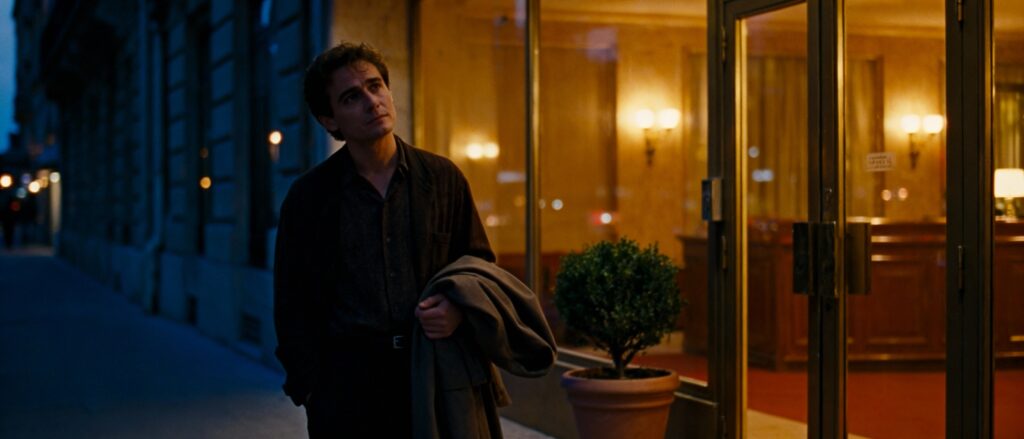
The pivotal moment in “I Have Been Here Before” happens when two characters sit together in uncomfortable silence. Neither knows what to say. The moment could die here, awkwardness killing connection. But then something happens. The silence becomes sacred. The discomfort transforms into intimacy. They realise they’re in love, without even uttering a word.
Janet speaks: “I know what I feel for Oliver Farrant is absolutely real, now and forever. I believe it’s always existed, it’s always been part of me.”
Not: “I’m falling in love with you.”
Not: “I think we could be compatible.”
But: It always existed.
She’s not describing a feeling that’s beginning. She’s describing a recognition of something that’s always been true. She’s meeting him not for the first time, but again. She’s recognising him, and the mutual eternal love that has always existed between them.
This is what you can’t find on a dating app, not because the apps are trying to obscure it, but because it emerges only in the presence of another person. In a moment of real vulnerability. In the gap between what you say and what you mean. You match with someone. You message. Maybe you meet. And somewhere in that process (sometimes immediately, sometimes gradually) you feel it: I know you. I’ve always known you. How is this possible?
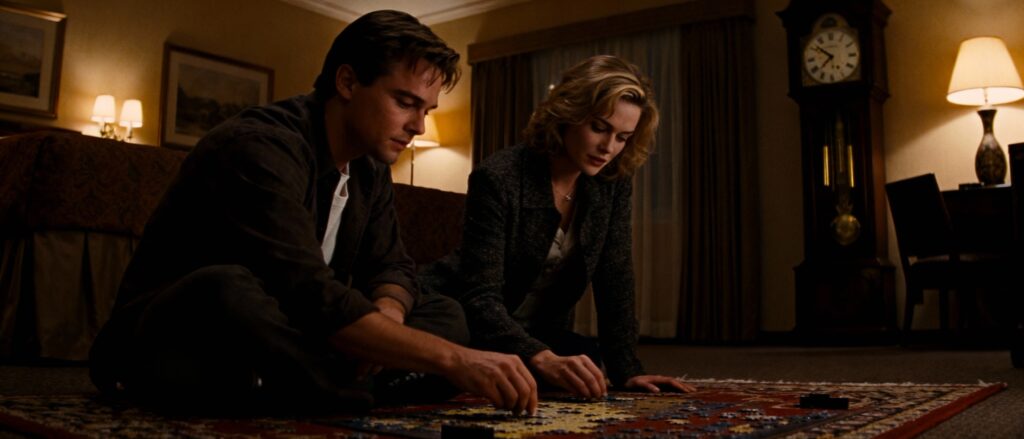
It’s the jigsaw moment. When the pieces fit so perfectly that you stop questioning whether they belong together. They just do.
Have you ever had that moment? When you’re talking to someone and realise: we think the same way. We move through the world the same way. We see things the same way. The intellectual alignment is so complete that it feels fated. Like two people couldn’t be more aligned if they tried.
Or the opposite. You meet someone who feels entirely new. Unfamiliar. Different in every way you are. And yet there’s a sense that you need this difference. That this person teaches you something essential. That meeting them changes your trajectory.
Both of these are recognition. In one case, you recognise yourself. In the other, you recognise what you’re missing.
Priestley suggests these aren’t coincidences of timing. They’re not luck. They’re recognition. They’re meeting someone you’ve somehow always known, whether because you’ve met them before in another spiral of time, or because on some level, your souls recognise each other.
It sounds mystical. It sounds irrational. But isn’t that exactly what it feels like?
The Spiral We Can’t Escape
But Priestley’s play has a darker wisdom too.
The mysterious doctor explains to the other characters that time doesn’t move in a straight line. It moves in spirals. We don’t progress continuously upwards. Instead, we circle back to traverse the same road again, and again, and again, until we develop enough consciousness to evolve beyond that track entirely and move further up the spiral.
It’s not progress in the traditional sense. It’s repetition with potential. Every loop around the same track is an opportunity to learn, to choose differently, to become more conscious. But if we don’t? We’ll traverse that same road indefinitely. The same patterns. The same lessons. The same choices.
“If you don’t take action and confront things you will go through ‘ever darkening circles,'” the doctor warns.
Now consider this thought: what if there is one person who is genuinely right for you, your soulmate, your true match, but meeting them depends entirely on timing and conditions? What if you’re destined to be together, but only when the moment is absolutely right? What if you’re meant to circle through this spiral a thousand times, repeating the same road, waiting for the moment to finally align? What if you’ll keep repeating it (a million times, ten million times) until the conditions converge and you’re both finally ready?
This changes everything. It means the reason you haven’t met them isn’t because they don’t exist. It’s because the conditions aren’t right. Yet. And every loop around this spiral is a chance to develop the consciousness needed to recognise them when they arrive.
But it also means something terrifying: you might keep repeating the same patterns indefinitely if you don’t develop enough consciousness to break the cycle.
How many times have you found yourself in the same relationship dynamic with different people? The partner who’s emotionally unavailable. The one who’s too needy. The one who’s perfect on paper but hollow inside. The one you know is wrong but you stay anyway. You think each time will be different. You think this person is different. But months in, you realise: you’re in the same spiral. The same pattern. The same dynamic that didn’t work the last time, the time before that, the time before that.
And more insidiously: how many times have you stayed in a relationship that doesn’t serve you? Known you should leave, but froze? Told yourself that even though this isn’t right, maybe it’s the best you can do? Maybe this is as good as it gets? Maybe the world of opportunity isn’t actually as big as you think?
We get trapped. Not by the other person. By our own lack of consciousness. By our unwillingness to recognise the pattern. By our fear that if we leave, we won’t find anyone better. So we stay. We freeze. We repeat. We traverse the same road again, waiting for the moment when it might be different, but we’ve learned nothing. We’ve developed nothing. So it will never be different.
Unless we break the cycle.
How many times have you repeated the same relationship pattern, thinking this time it’ll be different?

The Doctor’s Warning
There’s a moment in Priestley’s play that captures something extraordinary: the doctor has what he calls a “memory” of the future. He’s experienced a premonition, or perhaps he’s actually lived through what’s about to happen in a previous spiral through time. He speaks of it as a memory, even though it hasn’t occurred yet. And what he remembers horrifies him.
He sees the two young lovers, Farrant and Janet, coming together, falling in love. He recognises the moment we celebrated earlier: “I believe it’s always existed, it’s always been part of me.” But he also sees the consequences. He remembers the devastation that follows. He attempts to interfere. To warn them. To alter the course of fate itself.
This is the paradox: if everything is destined, if we’re meant to meet someone at exactly the right time, what happens when we try to change it? When we try to prevent what we’ve foreseen?
The doctor attempts to play God. He tries to stop something he believes is inevitable. But does he succeed? Can fate be prevented? Or is he simply another part of the spiral, his warning itself part of the predetermined pattern?
Priestley never answers this question directly. But he forces us to sit with it: what would you do if you knew meeting someone would lead to pain? Would you prevent it? Could you prevent it? Or is the pain itself part of the journey, the very lesson you’re meant to learn on this particular loop of the spiral?
The Fateful Decision
But there’s hope in Priestley. A strange, demanding hope.
The doctor says: “A soul can make a fateful decision.”
You have the power to change. But only if you’re conscious. Only if you can see the spiral you’re in. Only if you’re willing to make a different choice, even when it’s terrifying. Gurdjieff echoed this: conscious love demands work on oneself; without it, we mechanically repeat the same patterns. This is what separates the people who grow from the people who repeat. It’s not luck. It’s not the universe sending them a better partner. It’s the decision to change. To say: I see the pattern. I’m not doing this again. I’m getting out.
And then, when you’ve done that work, when you’ve broken the spiral, when you’ve become conscious of your own patterns, then you’re ready for real connection. Then you can meet someone and recognise them not because the universe is confirming destiny, but because you’re finally awake enough to see them clearly.
The synchronicities still matter. The instant recognition still matters. The feeling of this person, yes, that still matters.
But it only becomes real love if you’re conscious. If you’ve done the work to understand yourself. If you’re no longer repeating, but choosing.
What This Means
When you see someone’s photo and feel that inexplicable pull, Priestley suggests: trust it. That’s intuition. That’s recognition. That’s your deeper self acknowledging something real.
But also: notice the patterns. Notice if you keep choosing the same type of person. Notice if you’re staying in something that doesn’t serve you. Notice if you’re frozen, afraid, trapped in a spiral, repeating a road you’ve already travelled a thousand times.
Because timing isn’t just about when you meet someone. It’s also about whether you’re ready. Whether you’ve done the work. Whether you’ve become conscious enough to recognise real connection when it arrives.
What if your soulmate exists? What if you’re destined to meet them, but only after you’ve circled through enough loops to become the person who can truly see them? What if every repetition is a chance to develop the consciousness needed for that moment?
Then the photo says a thousand words. Your intuition reads those words instantly. But the real work, the soul work, is becoming conscious enough to understand what you’re reading. To break the spirals. To make the fateful decisions.
That’s when you can truly meet someone. Not for the first time, but again, as the person you were meant to become.